
Month: May 2025
Which Is Better? Cow Manure Liquid Fertilizer Making vs. Solid Cow Manure Fertilizer Granulation
When it comes to utilizing cow manure for organic fertilizer production, two main technologies dominate the market: liquid fertilizer processing and solid fertilizer granulation. While both convert cow dung into valuable nutrients for crops, they differ significantly in terms of manufacturing processes, machinery involved, and end-use applications.
1. Processing Technology
Liquid Fertilizer Production from cow manure involves diluting cow manure with water and fermenting it in a closed system. Microbial agents may be added to accelerate decomposition and nutrient solubilization. The process usually includes anaerobic or aerobic liquid fertilizer fermentation tanks.
Solid cow manure Fertilizer Granulation requires a more intensive sequence of composting, drying, crushing, mixing, and granulating. The composted manure is transformed into uniform granules using various granulation methods such as disc granulation, rotary drum, or double roller extrusion.
2. Machinery Comparison
For Liquid Fertilizer:
Fermentation Tanks: Sealed aerobic/anaerobic tanks with agitators and temperature controls.
Solid-Liquid Separator: Used to remove excess solids before or after fermentation.
Filtration Unit: Ensures the final product is free from large particles.
Storage and Mixing Tanks: Used for post-treatment additives or dilution.
For Solid Granular Fertilizer:
Composting Turner: Windrow or groove turners for aerobic composting.
Crusher & Mixer: Prepares composted material for granulation.
Granulation Machine: Disc granulator, drum granulator, or roller press depending on the process.
Drying & Cooling Machines: Reduce moisture for long-term storage.
Screening Machine: Ensures consistent granule size.
Packing Machine: Automates the final packaging process.
3. Production Complexity & Cost
Cow dung liquid fertilizer systems are simpler and less equipment-intensive, making them ideal for farms with limited infrastructure. However, they require liquid fertilizer equipment with stainless steel material. So, its investment is not low.
Granular fertilizer production is more complex, involving multiple processing stages and higher initial equipment investment. Yet, it yields a stable, transportable, and commercially viable product that suits broader markets.
Conclusion
From a technological perspective, liquid fertilizer making is a faster, low-cost solution with fewer machines and quicker turnaround. Granular production, on the other hand, demands more processing steps and equipment, but creates a value-added, shelf-stable product suitable for large-scale distribution.
Choosing the right system depends on your production goals: rapid nutrient supply and farm-scale use favor liquid systems, while commercial fertilizer manufacturing demands the sophistication of granulation lines. If you interested in projects, you can visit https://fertilizerequipmentmanufacturer.com/how-to-make-liquid-fertilizer-from-cow-dung/
Машина для производства гранул нитрата калия: большой мир в маленьких гранулах
На стыке химического и сельскохозяйственного производства существует незаметный, но незаменимый тип оборудования — гранулятор калиевой селитры. Калийная селитра, как высокоэффективное комплексное удобрение и промышленное сырье, широко используется в современном сельскохозяйственном растениеводстве и промышленном производстве. Гранулятор нитрата калия — это ключевой «герой за кулисами», который может перерабатывать нитрат калия в специальные формы для удовлетворения различных потребностей в использовании. Сегодня давайте подробнее рассмотрим секреты этого удивительного устройства.

1. Принцип работы и основная структура гранулятора калиевой селитры
Принцип работы гранулятора калиевой селитры заключается в переработке порошкообразного или расплавленного калиевой селитры в гранулы определенной формы и размера на основе различных технологий формования. Распространенные методы грануляции включают экструзионную грануляцию и дисковую грануляцию. Различные методы соответствуют различным конструкциям оборудования и применимым сценариям.
Экструзионный гранулятор использует шнек или поршень для продавливания материала из нитрата калия через отверстие матрицы, в результате чего образуется материал в форме полосы, который затем разрезается на частицы определенной длины с помощью резака. Ее основными компонентами являются система экструзии шнека, матрица и режущее устройство. Винт создает сильную тягу, вращаясь, перемещая и уплотняя материал вперед; Отверстия в матрице определяют диаметр частиц, а скорость резака контролирует длину частиц. Частицы, полученные этим методом грануляции, обладают высокой плотностью и прочностью и подходят для сценариев с высокими требованиями к твердости частиц и износостойкости, например, при производстве промышленных взрывчатых веществ.
Основной корпус дискового гранулятора представляет собой наклонный вращающийся диск. Материал продолжает вращаться в диске, а связующее вещество распыляется (при грануляции калиевой селитры для склеивания иногда используется ее собственная гигроскопичность в условиях определенной влажности), постепенно образуя сферические частицы. Такие параметры, как скорость вращения диска, угол наклона и время нахождения материала в диске, влияют на размер и качество частиц. Дисковый гранулятор имеет простую конструкцию и удобен в эксплуатации. Получаемые частицы имеют приблизительно сферическую форму и обладают хорошей текучестью. Он очень популярен в сфере производства сельскохозяйственных удобрений.
2. Технические преимущества гранулятора калиевой селитры
1. Точный контроль размера частиц
Гранулятор калиевой селитры позволяет точно контролировать размер частиц в соответствии с производственными потребностями. Будь то крупные частицы размером 3–5 мм, необходимые для легкого механического внесения в сельскохозяйственные удобрения, или мелкие частицы размером 0,5–1 мм, необходимые в промышленных применениях для быстрой реакции растворения, — обоих можно достичь путем регулировки параметров оборудования, что значительно улучшает применимость продукта.
(II) Эффективные и стабильные производственные показатели
Современный гранулятор калиевой селитры оснащен автоматизированной системой управления. От транспортировки материала и грануляции до сбора готовой продукции — весь процесс можно осуществить с помощью одной кнопки, что сокращает ручное вмешательство, снижает трудоемкость и повышает эффективность производства. Оборудование работает стабильно и надежно и может работать непрерывно в течение длительного времени, удовлетворяя потребности крупномасштабного производства.
3. Энергосберегающая и экологически чистая конструкция
Новое поколение грануляторов калиевой селитры ориентировано на энергосбережение и защиту окружающей среды. В системе отопления используются высокоэффективные и энергосберегающие нагревательные элементы, а также интеллектуальная технология регулирования температуры для снижения потребления энергии; Что касается пылеудаления, то современные пылеулавливающие устройства оснащены средствами эффективного сбора и очистки пыли, образующейся в процессе производства, снижения загрязнения окружающей среды и соответствия требованиям устойчивого развития.
Хотя гранулятор калиевой селитры выглядит обыденно, он играет незаменимую роль во многих областях. От надежды на урожай в сельском хозяйстве до гарантии качества промышленной продукции — каждая тщательно обработанная крупинка калийной селитры несет в себе собственную ценность. Для получения более подробной информации посетите сайт:https://www.granulyator.com/product/granulyator-kaliynaya-selitra/
What Effective Microorganism Agents Are Used in Biofertilizer Production?
In the production of biofertilizer, the role of effective microorganism (EM) agents is fundamental. These microbial strains not only accelerate composting but also enhance soil fertility and plant growth when applied. This blog explores the most commonly used EM agents in biofertilizer production, the optimal timing for their application, and the related equipment that ensures their effective integration into the production line.
1. Common Types of Effective Microorganism Agents
Effective microorganism agents used in biofertilizer production typically include a combination of beneficial bacteria, fungi, and actinomycetes. Each strain serves a specific purpose:
-
Bacillus subtilis – Promotes organic matter decomposition and suppresses pathogens.
-
Azotobacter – Fixes atmospheric nitrogen and improves soil fertility.
-
Phosphate-Solubilizing Bacteria (PSB) – Enhances phosphorus availability to plants.
-
Trichoderma spp. – Fungi that suppress soil-borne diseases and promote root health.
-
Actinomycetes – Aid in breaking down cellulose and lignin from crop residues.
These EM agents are typically supplied as dry powders or liquid inoculants and must be introduced carefully during processing.
2. Application Timing in Biofertilizer Production
To maintain the viability of microbial strains, the timing of EM agent addition is critical:
A. During Composting (Thermophilic Phase)
Purpose: Enhance decomposition, accelerate fermentation.
Best Applied With:
-
Compost turner: During pile turning, EM liquids or powders are evenly sprayed or blended into the windrow or groove compost system.
-
Spray systems: Integrated nozzles mounted on compost turners improve distribution of microbial agents.
Note: Only heat-tolerant strains (like Bacillus subtilis) should be added during this high-temperature phase.
B. Post-Composting (Cooling/Maturation Phase)
Purpose: Enrich biofertilizer with functional microbes that are sensitive to high heat.
Best Applied With:
-
Horizontal mixer or double-shaft mixer: Mixes EM agents with fermented compost after it cools below 40°C.
-
Microbial dosage feeder (optional): Automatically controls EM input based on volume and moisture content.
This stage is ideal for nitrogen-fixing bacteria and phosphate-solubilizers to maintain biological activity.
C. Pre-Granulation or Coating Stage
Purpose: Final microbial enhancement before storage and application.
Best Applied With:
-
Disc granulator or new-type organic fertilizer granulator: EM agents can be introduced during wet granulation.
-
Coating machine: Adds heat-sensitive or functional microbes after drying and cooling, preserving their viability.
By applying EM agents after granule formation, you avoid heat damage and extend shelf life.
3. Equipment for Supporting EM Integration
A modern biofertilizer production line incorporates several machines to support EM application:
| Equipment | Role |
|---|---|
| Compost Turner | Aerates pile and enables EM spraying |
| Fermentation Control System | Monitors temperature and humidity |
| Mixing Machine | Ensures uniform EM distribution |
| Granulator | Converts compost into granules with optional EM inclusion |
| Coating Machine | Applies sensitive EM strains post-drying |
Conclusion
Understanding what effective microorganism agents are used in biofertilizer production is key to creating high-value, sustainable fertilizers. By combining strains like Bacillus, Azotobacter, and Trichoderma with the right processing equipment and timing strategies, producers can achieve optimal microbial activity and product quality.
Whether during composting, mixing, or coating, EM integration depends heavily on the biofertilizer equipment you use. With automated mixers, compost turners, and granulators designed to support microbial inoculant use, your production line can deliver consistent, biologically enriched fertilizers to meet modern agricultural demands. Welcome to visit :https://www.biofertilizerproduction.com/faq-items/how-to-use-effective-microorganism-in-bio-compost-making-process/
Куриный помет «превращается» в золотое удобрение, это производственное оборудование помогает вам использовать возможности зеленого бизнеса
Несмотря на бурное развитие современной животноводческой отрасли, переработка куриного помета всегда была проблемой. Хаотично сваленный куриный помет не только источает резкий запах и загрязняет окружающую среду, но и может стать причиной размножения большого количества болезнетворных микроорганизмов и поставить под угрозу экологическую безопасность окружающей среды. Но знаете ли вы, что этот, казалось бы, бесполезный куриный помет можно превратить в ценное порошкообразное органическое удобрение после переработки на профессиональном оборудовании? Линия по производству органических удобрений из порошкообразного куриного помета, запущенная нашей компанией, является инструментом для реализации процесса «превращения отходов в сокровища» и открывает для вас дверь к богатству в зеленом сельском хозяйстве!

Решение-Куриный-помет-как-удобрение
Инновационная технология производства для создания высококачественных органических удобрений
Инновации в предварительной обработке: При традиционной обработке куриного помета удаление примесей и регулирование влажности требуют много времени и труда. Наша производственная линия оснащена интеллектуальной машиной для удаления примесей, которая может быстро и точно отделять перья, песок, гравий и другие примеси с помощью многослойного просеивания и магнитных всасывающих устройств, со степенью удаления до 99%. В то же время датчики влажности и автоматические системы добавления вспомогательных материалов используются для автоматического смешивания вспомогательных материалов, таких как солома и рисовая шелуха, в соответствии с исходной влажностью куриного помета, что позволяет точно контролировать влажность материалов в оптимальном диапазоне ферментации, что значительно экономит время и трудозатраты на последующие процессы.
Эффективная технология ферментации: использование запатентованной динамической камеры ферментации в сочетании с системой контроля температуры и влажности на основе Интернета вещей. В процессе ферментации оборудование автоматически контролирует температуру, концентрацию кислорода и другие данные на складе. Когда температура опускается ниже установленного значения, включается интеллектуальная система отопления; При недостатке кислорода вентиляционное устройство автоматически регулирует подачу воздуха. Такой точный контроль значительно повысил эффективность ферментации. Цикл ферментации, который изначально занимал 10–15 дней, теперь может быть завершен всего за 5 дней. Кроме того, ферментация достаточная, степень зрелости высокая, а полученное органическое удобрение имеет более длительный эффект.
Тонкое дробление и просеивание: в процессе дробления используется двухроторная дробилка, уникальная конструкция лезвий которой с разнесенным расположением позволяет быстро измельчать ферментированные материалы в мелкий и однородный порошок. Оснащенный высокоточной виброситовой машиной, размер ячеек сита можно гибко изменять в соответствии с потребностями заказчика, чтобы гарантировать, что размер частиц готового продукта соответствует требованиям различных рынков. Отсеянные некачественные крупные частицы возвращаются непосредственно в дробилку для вторичной переработки через замкнутую систему конвейерной транспортировки, что обеспечивает нулевые отходы материала.
Интеллектуальная постобработка и упаковка: на этапе постобработки автоматизированная система добавления может точно добавлять микробные агенты, микроэлементы и т. д. в соответствии с заданными формулами для улучшения функциональных свойств органических удобрений. Процесс упаковки осуществляется с помощью полностью автоматической упаковочной машины количественного дозирования, которая поддерживает различные спецификации упаковки: от небольших упаковок весом 5 кг до больших упаковок весом 50 кг одним щелчком мыши. Скорость упаковки высокая, а измерения точные, что существенно повышает эффективность производства.

Chicken manure biofertilizer production line
Прочность основного оборудования демонстрирует гарантию качества.
Прочный материал и гуманизированный дизайн: Основной корпус всего оборудования производственной линии изготовлен из высокопрочной нержавеющей стали и износостойкого сплава, который обладает высокой коррозионной стойкостью и сроком службы более 10 лет. Компоновка оборудования полностью учитывает удобство эксплуатации. Все ключевые компоненты оснащены смотровыми отверстиями и устройствами для быстрой разборки. Ежедневное обслуживание выполняется просто и быстро, и даже непрофессионалы смогут легко приступить к его выполнению.
Пионер в области энергосбережения и сокращения потребления: наше оборудование отличается превосходными показателями энергосбережения. В бродильном бункере используются высокоэффективные изоляционные материалы для снижения потерь тепла; Дробильное оборудование оснащено двигателем переменной частоты, который может автоматически регулировать скорость в зависимости от количества материала, что позволяет снизить потребление энергии. После реальных испытаний, по сравнению с аналогичными производственными линиями, энергопотребление нашего оборудования снижено более чем на 30%, что позволяет предприятиям экономить значительные эксплуатационные расходы.
Экологичность и бесшумность: для решения проблемы запаха в процессе переработки куриного помета производственная линия оснащена многоступенчатой системой дезодорации. Благодаря биологическому фильтру, адсорбции активированного угля и другим технологиям запах эффективно очищается, а выхлопные газы соответствуют национальным стандартам по охране окружающей среды. В то же время в оборудовании используются технологии амортизации и шумоподавления, позволяющие контролировать уровень рабочего шума ниже 65 децибел, что не будет мешать окружающей среде.
Полный цикл услуг, позволяющий вам инвестировать со спокойной душой
Мы прекрасно понимаем, что качественное оборудование требует комплексной сервисной поддержки. На ранней стадии планирования проекта наша команда экспертов предложит индивидуальные решения с учетом размера вашего объекта, инвестиционного бюджета и производственных целей. На этапе установки и ввода оборудования в эксплуатацию инженеры будут оказывать помощь на месте, чтобы обеспечить бесперебойный ввод оборудования в эксплуатацию и обеспечить систематическое обучение ваших сотрудников. В период эксплуатации оборудования команда послепродажного обслуживания работает круглосуточно в течение всего года, реагируя на заявки на ремонт в течение 24 часов и прибывая на место для устранения проблемы в течение 48 часов. Кроме того, мы также регулярно предоставляем нашим клиентам услуги по модернизации оборудования, чтобы идти в ногу с развитием отраслевых технологий и поддерживать конкурентоспособность ваших производственных линий.
Сегодня, когда экологичное сельское хозяйство и экономика замкнутого цикла стали мейнстримом времени, рыночные перспективы для порошкообразного органического удобрения из куриного помета широки. Выбор нашего оборудования для линии по производству органических удобрений из порошкообразного куриного помета означает выбор пути развития с низкими затратами, высокой отдачей и устойчивым развитием. Независимо от того, являетесь ли вы племенной компанией, желающей расширить свой бизнес, или инвестором, ищущим стартап, мы с нетерпением ждем возможности поработать с вами, чтобы превратить куриный помет в богатство и вместе написать новую главу в зеленом сельском хозяйстве! Для получения более подробной информации посетите сайт:https://www.liniyaudobreniy.com/resheniye-kurinyy-pomet-kak-odobreniye/
Estiercol de cerdo para abono soluble en agua
El proceso industrial de utilización de estiércol de cerdo como fertilizante soluble en agua incluye principalmente los siguientes pasos: recolección y procesamiento de la materia prima, tratamiento de fermentación, granulación, secado y enfriamiento, cribado y envasado.
Recolección y procesamiento de materia prima: Primero, se recolecta el estiércol de cerdo y se procesa inicialmente, incluidos pasos como la eliminación del agua y la detección de impurezas. Los equipos de eliminación de agua, como los deshidratadores de estiércol, pueden reducir eficazmente el contenido de humedad del estiércol de cerdo, haciéndolo más adecuado para el tratamiento de fermentación posterior.
Tratamiento de fermentación: El estiércol de cerdo debe fermentarse biológicamente para descomponer la materia orgánica y convertirla en nutrientes beneficiosos. Los equipos de compostaje de fermentación, como las máquinas de compostaje de canal y las máquinas de compostaje sobre orugas, pueden mejorar la eficiencia de la fermentación al girar el compost y garantizar la estabilidad y uniformidad del proceso de fermentación.
Granulación: El estiércol de cerdo fermentado pasa a través de un equipo de granulación para formar un fertilizante orgánico granular adecuado para la fertilización. Los equipos de granulación comunes incluyen granulador de extrusión de matriz plana, granulador de extrusión de doble rodillo, etc., que pueden garantizar una granulación uniforme y satisfacer las necesidades de diferentes cultivos.
Secado y enfriamiento: Las partículas de fertilizante orgánico después de la granulación deben secarse mediante un equipo de secado (como un secador de fertilizante orgánico) para eliminar el exceso de agua. Posteriormente, el equipo de enfriamiento enfría las partículas para asegurar la estabilidad de las partículas y evitar la aglomeración. Obtenga una cotización
Cribado y envasado: utilice una máquina cribadora de tambor para eliminar las partículas calificadas y reprocesar las partículas no calificadas. Las partículas calificadas se envasan automáticamente mediante máquinas envasadoras para facilitar su almacenamiento y transporte.
Detalles específicos de la operación:
Proceso de fermentación: El agua fecal debe ser fermentada por microorganismos especiales antes de poder utilizarse. Youjunkang se compone de una variedad de cepas microbianas para el tratamiento inofensivo de heces y aguas residuales, incluidos Bacillus subtilis, Bacillus licheniformis, Bacillus amyloliquefaciens, Bacillus megaterium, levadura, etc. La proporción del material es 1 paquete de Youjunkang (200 gramos), 1 kg de azúcar morena, 1 kg de harina de maíz y 100 kg de agua. Después de que el azúcar moreno se haya disuelto en agua, mezcle el Eujunkang y la harina de maíz y viértalos en el agua con azúcar moreno. Fermentar con oxígeno durante 1 a 2 días, luego espolvorearlo en 2 a 5 metros cúbicos de agua de estiércol. Fermente con oxígeno durante unos 20 días y se convertirá en un muy buen fertilizante a base de agua.
Método de oxigenación: Durante el proceso de fermentación, la piscina de estiércol debe oxigenarse con un equipo oxigenador, y el proceso temprano de activación del agua de azúcar morena también debe oxigenarse con un equipo oxigenador. El oxígeno se puede aumentar utilizando un pequeño aireador o una bomba de oxígeno.
Mediante los pasos anteriores, el estiércol de cerdo se puede convertir en fertilizante soluble en agua de alta eficiencia, lo que no solo resuelve el problema de la contaminación ambiental sino que también logra el reciclaje de recursos.
How Can Granulating Technology Reduce NPK Fertilizer Manufacturing Plant Costs?
In today’s competitive market, every fertilizer manufacturer seeks to minimize compound fertilizer plant cost while ensuring consistent quality. NPK compound fertilizer production, which blends nitrogen, phosphorus, and potassium in precise ratios, relies heavily on efficient granulation technology. The choice of suitable raw materials and advanced pellet making equipment determines not only product quality but also the overall fertilizer factory cost. Understanding how granulating technology contributes to cost efficiency will help optimize operations and maximize profitability in your fertilizer manufacturing plant.
Which Raw Materials Suit NPK Compound Fertilizer Granulation and Influence Production Costs?
Selecting appropriate raw materials for compound fertilizer granulation process directly affects the npk fertilizer production plant cost. Common base materials such as urea, ammonium sulphate, ammonium chloride, potassium chloride, potassium sulfate, and monoammonium phosphate create the nutrient foundation for NPK granule production. Additional ingredients like bentonite, dolomite, and various microelements enhance product effectiveness, but also impact the npk fertilizer plant setup cost due to sourcing and preprocessing requirements.
Proper raw material selection determines the need for pre-processing steps such as crushing or drying, which in turn influences the machinery required. For example, harder raw materials require a robust crushing machine, which may increase initial fertilizer plant investment but ensures smooth granulator operation. Consistency in raw material particle size enables the granulation line to operate with fewer interruptions, thus reducing energy consumption and maintenance costs. Manufacturers who carefully control the quality and type of inputs can streamline the compound fertilizer pelletizing process, avoiding unnecessary expenses in the production cycle.

How Can Advanced Granulating Equipment Lower Compound Fertilizer Production Costs?
The adoption of modern granulation machinery plays an essential role in minimizing fertilizer manufacturing plant costs. Advanced granulators, such as double roller extrusion granulators, disc granulators, and rotary drum granulators, each offer specific operational advantages. For instance, a double roller extrusion granulator forms NPK particles at lower moisture content, eliminating the need for subsequent drying procedures. This feature significantly lowers energy consumption and overall compound fertilizer plant cost.
Disc granulators and drum granulators provide flexibility in particle size, allowing for efficient adjustment and optimal product yield. These machines handle various raw material conditions, maintaining continuous operation with a reduced rate of equipment wear. In a well-organized compound fertilizer pellet making line, the batching machine accurately controls ingredient ratios, and the screening machine separates qualified granules from oversized or undersized particles. The packing machine then efficiently packages finished products, reducing labor demand and minimizing waste. By integrating granulating technology with complementary equipment, producers achieve consistent granule quality while reducing unplanned downtime and production losses.
What Strategies Enable Further Reduction of NPK Fertilizer Plant Setup Costs?
Cost-saving strategies in compound fertilizer pelletizing lines extend beyond machinery selection. Plant operators achieve additional savings through streamlined process design and automation. Incorporating automated batching and mixing systems reduces manual intervention and improves accuracy, thereby decreasing raw material wastage. Automation also enables real-time monitoring and adjustment, ensuring optimal granulation conditions and minimizing energy-intensive reprocessing.
Regular maintenance of all equipment in the granule production line, including granulators and auxiliary machines, extends machinery lifespan and reduces unexpected repair costs. Selecting reliable suppliers for compound fertilizer making machines ensures stable performance and long-term support. Transparent supplier relationships allow for timely updates on new technologies, further lowering fertilizer production plant cost through increased operational efficiency and improved product quality.
Summary
Reducing npk compound fertilizer production plant cost centers on the integration of suitable raw materials, advanced granulation machinery, and efficient process management. The adoption of modern granulators, combined with auxiliary equipment like batching, screening, and packing units, enables fertilizer manufacturers to achieve high-quality granules while minimizing energy use, labor, and maintenance expenses. For companies seeking to optimize their fertilizer factory cost and maintain competitiveness, professional fertilizer equipment manufacturers such as Yushunxin offer customized solutions tailored to your unique requirements, ensuring both operational efficiency and cost effectiveness in every phase of the compound fertilizer production process. You can visit: https://www.fertilizerproductequipment.com/npk-fetilizer-plant-cost/
Cow Dung Biofertilizer Making Line: Key Equipment and Process Overview
With the growing demand for sustainable agriculture, cow dung biofertilizer has emerged as a high-value organic product. A well-designed cow dung biofertilizer making line transforms raw animal waste into nutrient-rich fertilizer through a series of efficient, mechanized processes. Below is a detailed breakdown of the key equipment involved and the role each machine plays in the overall production line.
1. Raw Material Fermentation System
Purpose:
Fermentation is the first and most critical step in converting cow dung into biofertilizer. This process eliminates pathogens, weed seeds, and foul odors, while promoting the growth of beneficial microbes.
Core Equipment:
-
Compost Turner (Windrow or Groove Type): Enhances oxygen supply, promotes uniform fermentation, and speeds up microbial activity.
-
Fermentation Tank (Optional): For enclosed, controlled fermentation with temperature and moisture regulation.
In the cow dung biofertilizer making line, efficient fermentation ensures the foundation for high-quality granules.
2. Crushing and Mixing Unit
Purpose:
After fermentation, the material may still contain large lumps. Crushing and mixing are required to ensure uniform texture and nutrient distribution.
Core Equipment:
-
Semi-Wet Material Crusher: Reduces fermented cow dung into fine particles suitable for granulation.
-
Horizontal Mixer or Twin-Shaft Mixer: Blends cow dung with other organic materials or additives (e.g., bio-agents, humic acid) to improve fertilizer quality.
This stage of the cow dung biofertilizer manufacturing line prepares the material for efficient pelletizing.
3. Granulation System
Purpose:
Granulation transforms the mixed material into uniform fertilizer granules for easier packaging, transport, and application.
Core Equipment:
-
Disc Granulator / Rotary Drum Granulator / New Type Organic Fertilizer Granulator: Selection depends on production capacity and desired granule shape. These machines aggregate fine material into stable granules under rotating motion and moisture control.
Granulation is at the heart of the cow dung biofertilizer making line, determining product shape and durability. Click here to get more!
4. Drying and Cooling System
Purpose:
Freshly granulated fertilizer contains excess moisture. Drying and cooling are essential to improve shelf life and prevent microbial degradation.
Core Equipment:
-
Rotary Dryer: Removes moisture through high-temperature airflow.
-
Rotary Cooler: Quickly lowers the temperature of dried granules, reducing thermal damage and preparing them for screening.
This step is critical for maintaining the long-term quality of fertilizer in the biofertilizer making process.
5. Screening and Coating Unit
Purpose:
To improve the uniformity and appearance of final products, screening removes oversize or undersize particles, while coating enhances product stability.
Core Equipment:
-
Rotary Screening Machine: Separates qualified granules from unqualified ones, which can be reprocessed.
-
Coating Machine (Optional): Applies anti-caking or slow-release agents to finished granules.
In a professional cow dung biofertilizer making line, precision screening ensures that only quality products reach the packaging stage.
6. Packaging System
Purpose:
Final packaging ensures safe storage and convenient transportation.
Core Equipment:
-
Automatic Weighing and Packing Machine: Accurately fills and seals bags of various sizes, improving efficiency and reducing labor cost.
Packaging is the final step that completes the cow dung biofertilizer making line and prepares products for the market.
YUSHUNXIN can provide you with the high-quality cow dung biofertilizer processing equipment, feel free to contact us !
Conclusion
A complete cow dung biofertilizer production line integrates fermentation, crushing, mixing, granulation, drying, screening, and packaging—turning agricultural waste into high-quality organic fertilizer. Each piece of equipment plays a specific role, contributing to a sustainable and efficient production system. Investing in the right technology not only improves product quality but also supports circular agriculture and environmental protection.
If you are considering setting up a cow dung biofertilizer manufacturing line, choosing reliable, automated equipment will be key to achieving consistent results and long-term profitability. Welcome to visit : https://www.biofertilizerproduction.com/product/cow-dung-biofertilizer-making-line/.
Открывая двери эффективному производству: высококачественное оборудование для линии по производству сложных удобрений пользуется большим спросом
В процессе развития современного сельского хозяйства здоровый рост сельскохозяйственных культур неотделим от научно обоснованного удобрения, и комплексные удобрения стали выбором номер один для многих фермеров и компаний, занимающихся выращиванием растений, благодаря таким преимуществам, как комплексное содержание питательных веществ и длительный эффект удобрения. Для производства высококачественных и разнообразных сложных удобрений необходимо современное и стабильное оборудование для линии по производству сложных удобрений. Сегодня мы представим вам серию оборудования для линий по производству сложных удобрений с превосходной производительностью и лидерами продаж, которые помогут вам перехватить инициативу в области производства удобрений!

Производство-комплексных-удобрений
Полный комплект оборудования линии по производству сложных удобрений обычно состоит из нескольких частей, таких как система обработки сырья, система дозирования, система смешивания, система грануляции, система сушки, система охлаждения, система просеивания, система нанесения покрытия и система автоматического управления. Все части работают в тесном контакте друг с другом, чтобы завершить производственный процесс от сырья до готового комплексного удобрения.
Система обработки сырья
В основном он отвечает за дробление и измельчение различных основных видов сырья, таких как мочевина, диаммонийфосфат, хлорид калия и т. д., для достижения необходимого размера частиц и подготовки к последующим производственным процессам. Например, сыпучий хлорид калия необходимо измельчить на более мелкие частицы с помощью дробилки, а затем дополнительно измельчить с помощью измельчителя, чтобы обеспечить его полное и равномерное смешивание с другим сырьем в процессе смешивания.
Система дозирования
Это ключевой шаг в обеспечении точного соотношения питательных веществ в комплексном удобрении. Используя высокоточные электронные весы и интеллектуальные системы управления, различные виды сырья точно измеряются и дозируются в соответствии с заданными формулами. Независимо от того, производим ли мы удобрения с высоким содержанием азота, фосфора или сбалансированные по азоту, фосфору и калию комплексные удобрения, мы можем строго контролировать количество добавляемого каждого вида сырья, чтобы гарантировать стабильное и надежное качество продукции.
Гибридная система
Тщательно перемешайте и размешайте различные виды сырья, чтобы питательные вещества распределились более равномерно. К обычно используемому смесительному оборудованию относятся горизонтальные ленточные смесители, двухвальные лопастные смесители и т. д. Они используют уникальные конструкции перемешивания и методы движения для достижения эффективного смешивания материалов за короткое время, обеспечивая получение высококачественных смешанных материалов для последующих процессов грануляции.
Система грануляции
Это одно из основных звеньев в производственной линии сложных удобрений, определяющее форму частиц, размер и прочность сложного удобрения. Распространенные методы грануляции включают дисковую грануляцию, барабанную грануляцию, экструзионную грануляцию и т. д. В дисковом грануляторе используется вращающийся диск для постепенного формирования частиц под действием центробежной силы, трения и гравитации; барабанный гранулятор использует вращение барабана и внутренней копировальной пластины, скребка и других устройств для завершения грануляции материала в процессе прокатки; Экструзионный гранулятор использует большую силу экструзии для продавливания материала через матрицу с образованием регулярных частиц.

Барабанный-гранулятор
Система сушки и охлаждения
Частицы комплексного удобрения после грануляции содержат определенное количество влаги, и для обеспечения стабильности продукта при хранении излишки влаги необходимо удалить с помощью системы сушки. Температура высушенных частиц относительно высока, затем они охлаждаются до комнатной температуры с помощью системы охлаждения, что удобно для последующего просеивания и упаковки.
Системы просеивания и покрытия
Система просеивания отсеивает крупные и мелкие частицы, не соответствующие требованиям по размеру частиц, и возвращает их на повторную грануляцию для обеспечения однородности готовых частиц. Система покрытия создает защитную пленку на поверхности частиц, которая не только предотвращает впитывание влаги и агломерацию частиц, но и улучшает блеск и коммерческую ценность частиц.
Автоматическая система управления
Работа всей производственной линии контролируется и управляется в режиме реального времени. Операторы могут регулировать рабочие параметры каждого устройства с помощью компьютера или сенсорного экрана в центральной диспетчерской, оперативно обнаруживать и решать проблемы, возникающие в ходе производственного процесса, а также реализовывать автоматизацию и интеллектуальность производственного процесса.
Если вы ищете комплект эффективного, стабильного и высококачественного оборудования для линии по производству сложных удобрений, то наша продукция, безусловно, станет для вас идеальным выбором. Пожалуйста, свяжитесь с нами для получения более подробной информации об оборудовании и выгодных ценовых предложений. Давайте работать вместе, чтобы открыть новую главу в эффективном производстве сложных удобрений! Более подробную информацию можно найти на сайте:https://www.granulyator.com/product/liniya-po-proizvodstvu-slozhnosostavnykh-udobreniy/
Why Are Disc Granulating Machines Crucial in the Mineral Fertilizer Manufacturing Procedure?
May 29, 2025
Disc Pelletizer, Disc Pelletizer for Mineral Fertilizer Production, Mineral Fertilizer Production
Comments Off on Why Are Disc Granulating Machines Crucial in the Mineral Fertilizer Manufacturing Procedure?
cs
In the contemporary fertilizer industry, the importance of efficient granulation technology remains undeniable. Mineral-based fertilizer processing involves unique challenges, as raw materials from various rock, mine, and ore sources differ greatly in composition, particle size, and moisture content. For manufacturers seeking consistent, high-quality mineral fertilizer pellets, the choice of granulation equipment, especially disc granulators (also known as pan granulators or disc pelletizers), proves critical. This article explores the necessity of pan pelletizers in mineral fertilizer production, focusing on typical raw materials and relevant machinery.
Which Raw Materials Suit Mineral Fertilizer Production and What Are the Industry-Specific Requirements?
Mineral fertilizer production uses a broad spectrum of rock and ore-based materials. Common examples include phosphate rock (for rock phosphate fertilizer production), potash ore, limestone, dolomite, and gypsum. Additionally, mine waste or mineral tailings from metal mining can become valuable raw materials in specific fertilizer manufacturing lines, such as mine waste management for sustainable agriculture and environmental protection.
Each industry sector has particular needs. For example, limestone fertilizer production solutions require finely milled rock with specific purity, while NPK fertilizer manufacturing depends on a reliable supply of mineral nutrients in granular form. In bulk fertilizer blending plants, the demand focuses on uniform granule size and consistent nutrient distribution. The mining industry also emphasizes cost-effective reuse of mineral residues, aligning with global environmental concerns. As a result, the right granulation technology must handle diverse minerals, adjust to varying feedstock properties, and produce stable, transport-friendly fertilizer particles.
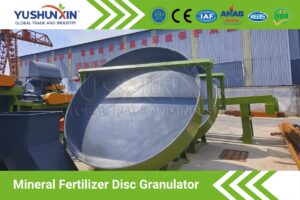
Disc Pelletizer for Mineral Fertilizer Production
How Do Disc Granulators Optimize the Mineral Fertilizer Granulation Process?
Disc granulating machines serve a central role in mineral fertilizer granule preparation. These pan granulators stand out because of their adaptability to a wide range of mine-based raw materials. With adjustable inclination angles and rotational speeds, disc pelletizers enable precise control over the granulation process. Operators can optimize moisture content, granule hardness, and particle size through simple setting adjustments. Compared to other machines, disc pelletizers manage both fine mineral powders and coarser ore fragments efficiently.
Disc granulators also offer excellent mixing and uniformity, ensuring each fertilizer granule contains a consistent blend of nutrients. As a result, the final product meets strict quality standards for both domestic and international markets. In rock phosphate fertilizer production, for instance, disc pelletizing helps bind powdery phosphate ore into dust-free, easy-to-handle granules. Additionally, pan granulators can function within compact production lines, minimizing space and investment requirements for mineral fertilizer manufacturing facilities.
What Other Machines Assist the Mineral Fertilizer Pellet Production Chain?
In addition to disc granulation machines, mineral fertilizer manufacturing procedures often employ ore fertilizer crusher machines (such as jaw rock crushers or raymond mills) for raw material preparation. These crushing machines break down large ore lumps, ensuring suitable particle size for efficient granulation. After granulation, screening machines classify pellets by size, removing undersized fines and oversize lumps to improve product uniformity. In the case of mineral organic fertilizer production lines, further blending and coating equipment may integrate additional nutrients or protective layers onto the granule surface, enhancing fertilizer performance.
By combining these specialized machines, manufacturers can address the full range of mineral raw materials and deliver high-quality fertilizer granules tailored to each application.
Why Should Manufacturers Prioritize Disc Granulator Selection for Mineral Fertilizer Processing?
The choice of granulation technology determines operational efficiency, product quality, and cost control. Disc pelletizers provide unmatched versatility for mineral ore-based fertilizer manufacturing. Their simple structure, low energy consumption, and adaptability to different rock or mine-derived materials make them essential in modern fertilizer production lines. Whether the requirement is for limestone granules, NPK particles, or recycled mineral waste pellets, the pan granulator ensures consistent, reliable results.
For companies seeking advanced and durable mineral fertilizer processing machinery, one professional fertilizer equipment manufacturer stands out: Yushunxin. With a comprehensive portfolio of disc granulators, ore fertilizer crushers, screening machines, and complete mineral fertilizer production line solutions, Yushunxin supports clients in achieving optimal granulation outcomes across rock, ore, and mine-based fertilizer manufacturing scenarios. You can visit: https://www.mineralfertilizerproductionsolutions.com/product/disc-granulator-machine/
Disc granulatormineral fertilizer production