A fertilizer producer that moves from trial batches to continuous commercial output needs more than a larger mixing vessel. A reliable commercial liquid organic fertilizer manufacturing process must coordinate raw-liquid preparation, formulation, fermentation, filtration, storage and filling so that every section matches the required hourly capacity. A poor capacity match between these sections can create waiting time, unstable formulations and unnecessary fertilizer production cost even when each individual machine operates normally.
What Raw Materials Fit a Commercial Liquid Organic Fertilizer Production Process?
Your plant should determine the feedstock before it fixes the fertilizer production system design. Different liquid fertilizer raw materials create different requirements for filtration, fermentation, mixing and storage.
Livestock operations may handle liquid fractions from cow manure, pig manure or chicken manure after solid-liquid separation. Biogas projects may use biogas slurry or other nutrient-containing liquid streams. Food-processing operations may work with suitable organic wastewater, while fertilizer manufacturers may formulate products from amino acids, humic substances, soluble nutrient materials, microbial preparations and selected additives.
A commercial liquid organic fertilizer production line design therefore starts with feedstock analysis rather than machine selection alone. Your technical team should evaluate suspended solids, viscosity, nutrient formulation, microbial requirements and the final packaging format.
Water quality also affects liquid fertilizer preparation. A fertilizer plant that produces microbial or water-soluble formulations may require controlled process water. A reverse osmosis treatment stage can support process-water preparation when the incoming water contains excessive dissolved substances. Your plant should match the actual treatment method with the local water analysis instead of adding unnecessary water-treatment machinery.
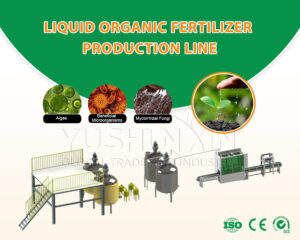
Liquid-Organic-Fertilizer-Production-Line
How Should Mixing and Fermentation Capacity Match the Production Target?
A commercial liquid fertilizer manufacturing process needs balanced batch volume and transfer capacity. A large fermentation tank does not solve a bottleneck when the upstream mixing section or downstream filling section handles much less material per hour.
The formulation section usually controls the addition of organic liquid, nutrient components, microbial agents and functional additives. A mixing or fermentation tank should provide sufficient agitation for the selected formula, while the production procedure should maintain consistent dosing between batches.
The fertilizer manufacturer should also calculate residence time. Fermentation, biological preparation or reaction stages often require much more time than pumping or filling. For this reason, a commercial plant may need several tanks working in sequence instead of one oversized tank. This production design allows one tank to process material while another tank supplies the next section.
A larger plant also needs a clear liquid transfer system. Pumps, pipes and valves must match viscosity and flow requirements. The production manager should treat these parts as one integrated fertilizer manufacturing system because an undersized transfer section can reduce effective plant capacity.
Which Liquid Fertilizer Manufacturing Equipment Controls Product Consistency?
Three equipment groups usually influence the commercial process most directly: the mixing or fermentation tank, the filtration system and the filling machine.
The mixing and fermentation section controls formula uniformity and biological processing. The filtration section removes unsuitable suspended material before the product reaches storage and packaging. A manufacturer that sells liquid fertilizer for irrigation systems or narrow-nozzle applications needs particularly careful filtration management because excessive solids can create downstream handling problems.
A scalable liquid fertilizer manufacturing equipment for scale-up should therefore match filtration throughput with mixing output. The fertilizer production technology should avoid a situation in which the tank releases a full batch faster than the filtration section can handle it.
The filling machine controls the final transition from process liquid to commercial product. Your plant should select filling capacity according to container size, hourly production and labor arrangement. A small operation may use a simpler filling procedure, while a larger factory may integrate filling, capping and labeling into a coordinated packaging system.
How Can a Plant Control Liquid Organic Fertilizer Production Cost?
The lowest machine quotation does not always produce the lowest project investment. A fertilizer producer should calculate the complete production cost from raw-material treatment to finished-product filling.
The budget should include tanks, filtration, transfer piping, pumps, filling equipment, electrical controls, workshop preparation, utilities and installation requirements. The plant should also consider cleaning time, formula-change time and storage requirements because these factors affect real production efficiency.
A modular process can reduce unnecessary initial investment. A new fertilizer factory may start with a suitable mixing and filling capacity and reserve space for additional tanks when sales volume increases. This method gives the project a clearer expansion path than buying oversized fertilizer machinery at the beginning.
A plant that processes both solid and liquid organic streams may also evaluate a complete organic fertilizer production line for the separated solid fraction. This arrangement can help the project plan raw-material handling as a complete fertilizer production solution instead of treating every waste stream independently.
How Does Commercial Liquid Fertilizer Filling Affect the Whole Production Line?
The packaging section determines how quickly finished liquid leaves the storage area. A slow filling stage can force the production team to hold more finished material, which increases storage demand and interrupts continuous fertilizer manufacturing.
A suitable commercial liquid fertilizer filling process should match bottle or container size with the required daily output. The purchasing team should also evaluate filling accuracy, cleaning requirements, material compatibility and future packaging changes before it compares equipment price.
Your project team should calculate the production line from the required finished-product volume backward. This approach helps the team identify the required filling speed, filtration capacity, tank volume and mixing schedule. The resulting fertilizer production procedure usually gives a more practical quotation than a machine-by-machine purchase.
What Should a Buyer Confirm Before Purchasing a Liquid Fertilizer Production System?
A fertilizer producer should confirm raw material, hourly capacity, formulation type, fermentation requirement, process-water condition, finished container size and available workshop space before final equipment selection. These parameters allow the supplier to prepare a realistic fertilizer equipment quotation and a more accurate plant layout.
The buyer should also compare the production system rather than only the individual machine price. A cost-effective fertilizer production project requires balanced processing capacity, reasonable automation and room for future expansion.
Companies that need more information about equipment configuration can learn more from the detailed process page. Near the procurement stage, A professional fertilizer equipment manufacturer – Yushunxin can support the project with equipment configuration and production-line planning based on confirmed material and capacity requirements. You can visit: https://www.fertilizerproductequipment.com/liquid-organic-fertilizer-manufacturing-process/
how to make liquid fertilizerliquid fertilizer production line

How Does a Commercial Liquid Organic Fertilizer Manufacturing Process Scale From Mixing to Filling?
August 25, 2026
liquid fertilizer making, liquid organic fertilizer production line
Comments Off on How Does a Commercial Liquid Organic Fertilizer Manufacturing Process Scale From Mixing to Filling?
cs
A fertilizer producer that moves from trial batches to continuous commercial output needs more than a larger mixing vessel. A reliable commercial liquid organic fertilizer manufacturing process must coordinate raw-liquid preparation, formulation, fermentation, filtration, storage and filling so that every section matches the required hourly capacity. A poor capacity match between these sections can create waiting time, unstable formulations and unnecessary fertilizer production cost even when each individual machine operates normally.
What Raw Materials Fit a Commercial Liquid Organic Fertilizer Production Process?
Your plant should determine the feedstock before it fixes the fertilizer production system design. Different liquid fertilizer raw materials create different requirements for filtration, fermentation, mixing and storage.
Livestock operations may handle liquid fractions from cow manure, pig manure or chicken manure after solid-liquid separation. Biogas projects may use biogas slurry or other nutrient-containing liquid streams. Food-processing operations may work with suitable organic wastewater, while fertilizer manufacturers may formulate products from amino acids, humic substances, soluble nutrient materials, microbial preparations and selected additives.
A commercial liquid organic fertilizer production line design therefore starts with feedstock analysis rather than machine selection alone. Your technical team should evaluate suspended solids, viscosity, nutrient formulation, microbial requirements and the final packaging format.
Water quality also affects liquid fertilizer preparation. A fertilizer plant that produces microbial or water-soluble formulations may require controlled process water. A reverse osmosis treatment stage can support process-water preparation when the incoming water contains excessive dissolved substances. Your plant should match the actual treatment method with the local water analysis instead of adding unnecessary water-treatment machinery.
Liquid-Organic-Fertilizer-Production-Line
How Should Mixing and Fermentation Capacity Match the Production Target?
A commercial liquid fertilizer manufacturing process needs balanced batch volume and transfer capacity. A large fermentation tank does not solve a bottleneck when the upstream mixing section or downstream filling section handles much less material per hour.
The formulation section usually controls the addition of organic liquid, nutrient components, microbial agents and functional additives. A mixing or fermentation tank should provide sufficient agitation for the selected formula, while the production procedure should maintain consistent dosing between batches.
The fertilizer manufacturer should also calculate residence time. Fermentation, biological preparation or reaction stages often require much more time than pumping or filling. For this reason, a commercial plant may need several tanks working in sequence instead of one oversized tank. This production design allows one tank to process material while another tank supplies the next section.
A larger plant also needs a clear liquid transfer system. Pumps, pipes and valves must match viscosity and flow requirements. The production manager should treat these parts as one integrated fertilizer manufacturing system because an undersized transfer section can reduce effective plant capacity.
Which Liquid Fertilizer Manufacturing Equipment Controls Product Consistency?
Three equipment groups usually influence the commercial process most directly: the mixing or fermentation tank, the filtration system and the filling machine.
The mixing and fermentation section controls formula uniformity and biological processing. The filtration section removes unsuitable suspended material before the product reaches storage and packaging. A manufacturer that sells liquid fertilizer for irrigation systems or narrow-nozzle applications needs particularly careful filtration management because excessive solids can create downstream handling problems.
A scalable liquid fertilizer manufacturing equipment for scale-up should therefore match filtration throughput with mixing output. The fertilizer production technology should avoid a situation in which the tank releases a full batch faster than the filtration section can handle it.
The filling machine controls the final transition from process liquid to commercial product. Your plant should select filling capacity according to container size, hourly production and labor arrangement. A small operation may use a simpler filling procedure, while a larger factory may integrate filling, capping and labeling into a coordinated packaging system.
How Can a Plant Control Liquid Organic Fertilizer Production Cost?
The lowest machine quotation does not always produce the lowest project investment. A fertilizer producer should calculate the complete production cost from raw-material treatment to finished-product filling.
The budget should include tanks, filtration, transfer piping, pumps, filling equipment, electrical controls, workshop preparation, utilities and installation requirements. The plant should also consider cleaning time, formula-change time and storage requirements because these factors affect real production efficiency.
A modular process can reduce unnecessary initial investment. A new fertilizer factory may start with a suitable mixing and filling capacity and reserve space for additional tanks when sales volume increases. This method gives the project a clearer expansion path than buying oversized fertilizer machinery at the beginning.
A plant that processes both solid and liquid organic streams may also evaluate a complete organic fertilizer production line for the separated solid fraction. This arrangement can help the project plan raw-material handling as a complete fertilizer production solution instead of treating every waste stream independently.
How Does Commercial Liquid Fertilizer Filling Affect the Whole Production Line?
The packaging section determines how quickly finished liquid leaves the storage area. A slow filling stage can force the production team to hold more finished material, which increases storage demand and interrupts continuous fertilizer manufacturing.
A suitable commercial liquid fertilizer filling process should match bottle or container size with the required daily output. The purchasing team should also evaluate filling accuracy, cleaning requirements, material compatibility and future packaging changes before it compares equipment price.
Your project team should calculate the production line from the required finished-product volume backward. This approach helps the team identify the required filling speed, filtration capacity, tank volume and mixing schedule. The resulting fertilizer production procedure usually gives a more practical quotation than a machine-by-machine purchase.
What Should a Buyer Confirm Before Purchasing a Liquid Fertilizer Production System?
A fertilizer producer should confirm raw material, hourly capacity, formulation type, fermentation requirement, process-water condition, finished container size and available workshop space before final equipment selection. These parameters allow the supplier to prepare a realistic fertilizer equipment quotation and a more accurate plant layout.
The buyer should also compare the production system rather than only the individual machine price. A cost-effective fertilizer production project requires balanced processing capacity, reasonable automation and room for future expansion.
Companies that need more information about equipment configuration can learn more from the detailed process page. Near the procurement stage, A professional fertilizer equipment manufacturer – Yushunxin can support the project with equipment configuration and production-line planning based on confirmed material and capacity requirements. You can visit: https://www.fertilizerproductequipment.com/liquid-organic-fertilizer-manufacturing-process/
how to make liquid fertilizerliquid fertilizer production line