
Month: July 2026
Как организовать прибыльное производство BB-удобрений мощностью 10 т/ч?
Производство BB-удобрений мощностью 10 т/ч подходит предприятиям, которые планируют выпускать несколько рецептур и быстро реагировать на сезонный спрос. В отличие от грануляционной технологии, такой проект не требует формирования новых гранул, их сушки и охлаждения. Производитель дозирует готовые гранулированные компоненты, равномерно смешивает их и фасует полученный продукт.
Однако простая технологическая схема не означает, что предприятие может работать без точного проектирования. Вам необходимо согласовать характеристики сырья, количество компонентов, рецептуры, производительность дозаторов и формат упаковки. Правильно спроектированная линия для выпуска BB-удобрений производительностью 10 т/ч помогает сократить потери сырья, сохранить целостность гранул и стабилизировать состав каждой партии.
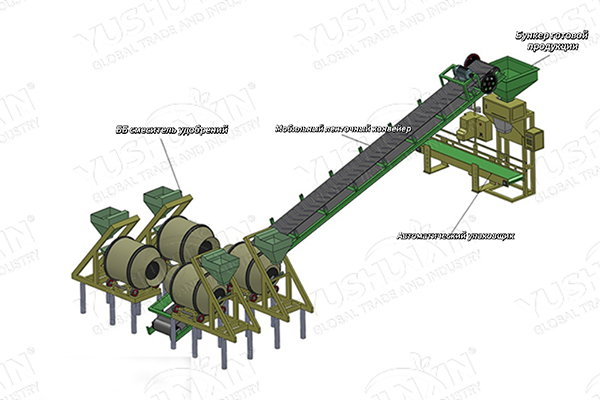
Линия по производству удобрений BB
Какие компоненты подходят для смешивания?
Основу BB-удобрений обычно составляют гранулированная мочевина, сульфат аммония, диаммонийфосфат, моноаммонийфосфат, хлорид или сульфат калия. В рецептуру также можно включить микроэлементы и специальные добавки. Такие смеси относятся к категории минеральных удобрений, поскольку они обеспечивают растения необходимыми питательными элементами.
Перед загрузкой компонентов следует сравнить размер, плотность и прочность гранул. Если эти показатели значительно различаются, готовая смесь может расслаиваться во время транспортировки или хранения. Кроме того, слишком хрупкие гранулы образуют пыль и снижают товарное качество продукции. Поэтому предприятие должно установить требования к входному сырью и регулярно проверять каждую поставку.
Как выглядит технологический процесс?
Стандартный процесс включает четыре основных этапа:
- Подача гранулированных компонентов в отдельные бункеры.
- Автоматическое взвешивание каждого материала по заданной рецептуре.
- Бережное смешивание компонентов без интенсивного дробления гранул.
- Фасовка готового BB-удобрения в мешки или биг-бэги.
Производительность 10 т/ч требует согласованной работы всех узлов. Если дозирующая система работает быстрее смесителя, сырье накапливается перед смешиванием. Если упаковочная машина имеет недостаточную производительность, готовый продукт задерживается после смесителя. Поэтому инженер должен рассчитывать линию как единый комплекс, а не подбирать каждую машину отдельно.
Почему точность дозирования определяет качество смеси?
Питательная ценность BB-удобрения напрямую зависит от соотношения компонентов. Даже небольшое отклонение может изменить заявленное содержание азота, фосфора или калия. Это особенно важно при выпуске востребованных формул, например 15-15-15, 16-16-16 или 20-10-10.
Автоматические дозаторы взвешивают каждый компонент и передают данные в систему управления. Оператор выбирает сохраненную рецептуру, после чего контроллер последовательно запускает подачу сырья. Такой автоматизированный проект смешивания гранулированных компонентов облегчает переход между формулами, уменьшает количество ручных операций и помогает вести учет расхода материалов.
Для стабильной точности необходимо регулярно калибровать весовые датчики. Также следует очищать места выгрузки, поскольку остатки предыдущей рецептуры могут попасть в следующую партию.
Как выбрать смеситель для BB-удобрений?
Смеситель должен равномерно распределять компоненты и одновременно защищать гранулы от разрушения. Слишком интенсивное механическое воздействие увеличивает долю порошка. Недостаточное перемешивание, наоборот, создает неоднородные участки в готовом продукте.
При подборе оборудования учитывают производительность, продолжительность одного цикла, коэффициент заполнения и характеристики гранул. Для предприятия мощностью 10 т/ч также важна скорость разгрузки. Смеситель не должен задерживать материал между партиями или создавать мертвые зоны, где накапливаются остатки удобрений.
Если завод планирует часто менять рецептуры, конструкция должна обеспечивать удобную очистку внутренних поверхностей. Это сокращает простой и снижает риск смешивания разных формул.
Какая упаковочная система подходит для проекта?
Формат упаковки зависит от целевого рынка. Мешки по 25–50 кг подходят для дилерских сетей, фермерских хозяйств и розничных каналов. Биг-бэги удобны для крупных сельскохозяйственных предприятий и оптовых поставок.
Автоматическая упаковочная машина выполняет взвешивание, наполнение и подготовку мешка к закрытию. Дополнительно линия может включать швейную машину, ленточный конвейер, металлодетектор и роботизированный укладчик. При выборе упаковочного участка следует учитывать не только номинальную скорость, но и необходимую точность фасовки.
В зоне упаковки также рекомендуется предусмотреть аспирацию. Она уменьшает запыленность рабочего пространства и помогает сохранить чистоту оборудования.
Что влияет на инвестиционный бюджет?
Стоимость проекта зависит от количества сырьевых бункеров, уровня автоматизации, требуемой точности дозирования и выбранной упаковочной системы. На бюджет также влияют металлоконструкции, конвейеры, системы пылеулавливания, электрическое управление и подготовка производственной площадки.
Инвестору следует учитывать не только цену машин. В расчет входят доставка, монтаж, подключение коммуникаций, обучение персонала и запас быстроизнашивающихся деталей. Если предприятие планирует расширение, модульная компоновка позволит позднее добавить новые бункеры или вторую упаковочную машину без полной перестройки цеха.
Подробный комплекс оборудования для BB-удобрений можно рассчитать после уточнения рецептур, характеристик сырья, режима работы и требуемого формата упаковки.
Как подготовить площадку к монтажу?
Для линии необходимо сухое помещение с ровным промышленным полом и удобными зонами для хранения сырья. Внутренняя логистика должна исключать пересечение потоков поступающих компонентов и готовой продукции. Кроме того, проектировщик учитывает высоту цеха, расположение колонн, доступ для погрузчика и место для обслуживания машин.
Перед изготовлением оборудования рекомендуется подготовить план помещения с точными размерами. Инженеры смогут определить расположение бункеров, смесителя, упаковочной системы и электрических шкафов. Это уменьшит вероятность изменений во время монтажа.
Как получить индивидуальную конфигурацию линии?
Для точного расчета вам потребуются сведения о видах сырья, количестве рецептур, размере гранул, продолжительности смены и типе упаковки. Также следует сообщить напряжение электросети, размеры цеха и страну реализации проекта.
Опытный производитель оборудования для удобрений Shunxin может разработать технологическую схему, подобрать производительность каждого узла и подготовить компоновку линии. Такой подход помогает согласовать дозирование, смешивание и упаковку еще до начала производства оборудования.
Для получения более подробной информации, пожалуйста, посетите: https://www.liniyaudobreniy.com/proekt-linii-po-proizvodstvu-udobreniy-bb-10-t-ch/
Производство смешанных удобрений BB производительностью 10 тонн в час

How to Upgrade an Existing Chicken Manure Compost Plant into a Granulation Line
If your plant already produces stable, mature chicken manure compost, the next step is often to convert it into uniform fertilizer granules. Granular fertilizer is easier to store, transport, package, and sell than loose compost powder. For many poultry farms and organic fertilizer producers, the most practical strategy is to upgrade chicken manure compost into granules instead of rebuilding the entire plant.
Check the Condition of Your Finished Compost
Before adding granulation equipment, check the moisture, particle size, maturity, and impurity level of your compost. Well-fermented chicken manure should have stable moisture, no strong ammonia odor, and few undecomposed materials.
If the compost contains large lumps, long fibers, stones, or excessive moisture, granulation may become unstable. A crusher and screening machine are usually installed before the granulator to create a uniform feed material. You may also need a mixer if you plan to adjust the formula or add humic acid, microbial agents, or other nutrients.
Choose a Suitable Granulation Process
A composted chicken manure granulation line for existing compost plant should match the condition of your raw material and the required granule shape.
A disc granulator is suitable for producing round particles with flexible capacity. A new-type organic fertilizer granulator performs well with fibrous compost and can provide a stable granulation rate. A rotary drum granulator is generally more suitable for large-scale, continuous production.
Your final choice should consider compost moisture, target particle size, workshop space, automation requirements, and whether the granules need drying. Get customized solution.
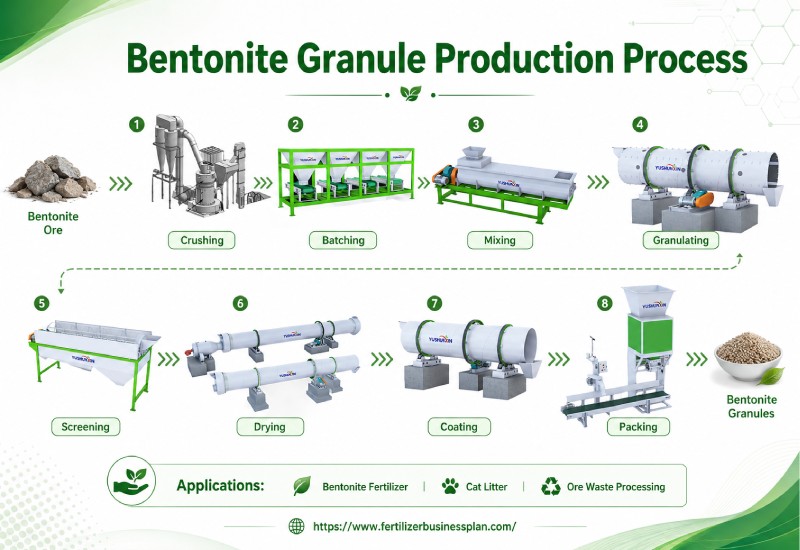
bentonite granule production process
Add the Required Downstream Equipment
Granulation is only one section of the upgrade. After forming, the granules may require drying, cooling, screening, coating, and packing. When your finished compost already has low moisture and granulation requires little added water, you may be able to simplify the drying system.
A typical upgrade may include a crusher, screener, mixer, granulator, dryer, cooler, final screening machine, coating machine, and automatic packing system.
For medium-scale commercial production, a 5–10 t/h chicken manure granulation line can provide continuous output while remaining practical for many existing fertilizer plants.
Calculate the Total Investment
The cost to turn chicken manure compost into pellets depends on production capacity, granulator type, moisture control, workshop layout, automation level, dust collection, and packaging requirements.
A compact system without a dryer usually requires less investment. A complete line with drying, cooling, coating, and automatic packing costs more but produces finished granules with better storage and commercial qualities.
Your budget should also cover electrical systems, installation, civil works, conveyors, spare parts, and commissioning.
Connect the New Line with Your Existing Plant
To upgrade compost fertilizer production line successfully, the new machines must connect smoothly with your existing compost storage, feeding, and finished-product sections.
Before confirming the design, provide your workshop dimensions, available power supply, compost moisture, expected hourly capacity, target granule size, and packing specifications. A properly designed upgrade can help you produce stronger, cleaner, and more marketable chicken manure fertilizer granules without replacing your current composting system. If you are interested in the project, you can visit https://www.granulatedcompostsolutions.com/product/chicken-manure-compost-pellets-production-solution/
Producción de biofertilizantes: proceso, equipos y oportunidades de inversión
La fabricación de biofertilizantes se está convirtiendo en una oportunidad importante para empresas agrícolas, plantas de compostaje, granjas ganaderas y fabricantes de fertilizantes que desean transformar residuos orgánicos en productos comerciales. A medida que aumenta la demanda de agricultura sostenible, muchos inversores buscan una forma más eficiente de procesar estiércol, compost, residuos vegetales y otros materiales orgánicos para obtener fertilizantes con mayor valor de mercado.
Una oportunidad para el mercado agrícola
Los biofertilizantes pueden ayudar a mejorar el uso de residuos orgánicos y responder a la necesidad de productos agrícolas más sostenibles. Para una empresa que ya dispone de materias primas orgánicas, este tipo de proyecto puede reducir problemas de almacenamiento, olores y contaminación, mientras crea una nueva fuente de ingresos.
Sin embargo, antes de iniciar el proyecto, es importante definir qué tipo de producto se desea fabricar: fertilizante en polvo, fertilizante granulado o fertilizante bioorgánico con adición de microorganismos. Cada opción necesita una configuración diferente de equipos y un plan de inversión adecuado.
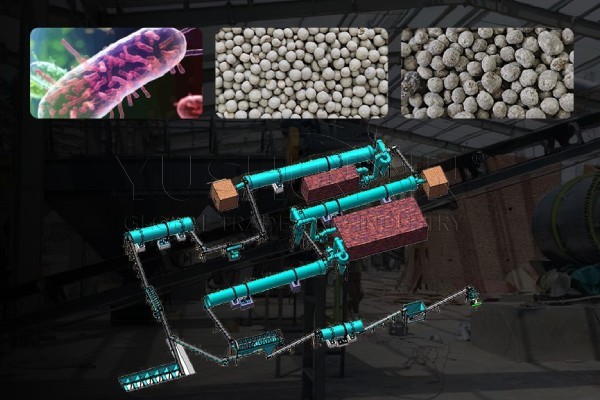
plan de producción de biofertilizantes
Cómo elegir una solución adecuada
Una buena solución para la fabricación de biofertilizantes debe diseñarse según las materias primas, la capacidad esperada, el espacio disponible y el mercado objetivo. Si el material ya está bien compostado y tiene una humedad adecuada, la línea puede ser más simple. En cambio, si el material tiene mucha humedad o contiene fibras largas, puede necesitar compostaje, trituración, mezcla, secado o cribado adicional.
Por eso, no conviene comprar máquinas de forma aislada. Es mejor planificar toda la línea como un sistema completo, desde el tratamiento inicial del material hasta el envasado final.
Equipos principales de una línea completa
El proceso de producción de biofertilizantes suele incluir varias etapas. Primero, los residuos orgánicos deben fermentarse o compostarse para mejorar su estabilidad. Después, el material puede pasar por trituración para obtener una granulometría más uniforme. Luego se realiza la mezcla, especialmente cuando se agregan nutrientes, materiales auxiliares o microorganismos.
Si el objetivo es producir gránulos, la línea también puede incluir granuladora, secadora, enfriadora, criba, recubridora y máquina de envasado. Para productos en polvo, la configuración puede ser más sencilla, ya que normalmente no requiere granulación ni secado intensivo. Vaya aquí para más detalles.
Materias primas comunes
Muchos proyectos producen biofertilizantes a partir de estiércol animal, como estiércol de vaca, gallinaza, estiércol porcino o residuos de granjas. Estos materiales son abundantes en muchas regiones agrícolas y pueden convertirse en fertilizantes de mayor valor después de una fermentación adecuada.
También se pueden utilizar residuos de cultivos, bagazo, lodos orgánicos, residuos de alimentos o compost maduro. La clave es analizar la humedad, el contenido orgánico, la estructura del material y los requisitos del producto final.
Inversión y planificación del proyecto
El costo de planta de producción de biofertilizantes depende de la capacidad, el nivel de automatización, el tipo de producto, la necesidad de secado y las condiciones del sitio. Una línea pequeña puede enfocarse en bajo costo y operación simple, mientras que una planta industrial necesita mayor estabilidad, control automático y equipos más resistentes.
Para una planta de biofertilizantes en España, también puede ser importante considerar normas ambientales, espacio de almacenamiento, control de olores y requisitos de calidad del fertilizante. Con una planificación correcta, este proyecto no solo ayuda a procesar residuos orgánicos, sino que también puede crear una línea de negocio estable para el mercado agrícola. Si le interesa el proyecto, puede visitar https://es.fertilizerbusinessplan.com/productos/plan-de-produccion-de-biofertilizantes/
How YUSHUNXIN Delivers a Turnkey Granulation Project for Blended Fertilizers
July 30, 2026
Blended Fertilizer Production, Bulk Blending Fertilizer Facory, Fertilizer Granulating Machine
Comments Off on How YUSHUNXIN Delivers a Turnkey Granulation Project for Blended Fertilizers
cs
Turning a Formula into an Industrial Project
Large fertilizer producers need more than individual machines. They need a coordinated project that converts several nutrient materials into stable, marketable granules while controlling capacity, energy use, labor, dust, and future expansion. YUSHUNXIN begins each project by reviewing the fertilizer formula, raw-material moisture, target particle size, required output, available workshop dimensions, local voltage, fuel options, and packaging specifications.
Based on these details, engineers develop a blended fertilizer granulation line that connects material preparation, batching, crushing, mixing, granulation, drying, cooling, screening, coating, recycling, and packing. This integrated approach prevents mismatched equipment and reduces bottlenecks during production.
Selecting the Right Granulation Route
Raw-material properties determine whether wet or dry processing offers the better result. Wet granulation uses controlled liquid addition to form rounded particles and includes drying and cooling. Dry granulation compresses suitable powders without adding water, so it can simplify the process and reduce thermal energy demand.
A reliable turnkey solution for blended fertilizer granules making should therefore start with material analysis rather than a standard equipment list. YUSHUNXIN can adjust the process according to nutrient compatibility, moisture sensitivity, desired granule strength, product size range, and operating conditions.
blend fertilizer granulation solution
Building a Balanced Equipment Configuration
Stable output depends on every section of the factory. The batching system must maintain recipe accuracy, while the crusher removes lumps that would affect mixing and pellet formation. The mixer distributes nutrients evenly before granulation, and the screening section separates qualified products from undersized or oversized material.
Engineers calculate recycle load, conveyor capacity, dust-control points, equipment elevation, maintenance access, and buffer storage. This creates balanced material flow instead of simply matching machines by their nominal hourly capacities.
Understanding the Project Investment
The blended fertilizer granulation system cost depends on production capacity, granulation method, automation level, equipment materials, drying fuel, environmental controls, workshop conditions, and packaging requirements. A lower initial quotation may exclude platforms, conveyors, electrical components, dust collection, spare parts, installation support, or commissioning services.
For a more useful investment comparison, buyers should evaluate total project scope, power consumption, labor demand, product yield, maintenance needs, and expansion potential. YUSHUNXIN can prepare different configurations around the same production goal, helping investors balance capital expenditure with long-term operating efficiency. Go here for details.
Choosing the Core Granulation Equipment
Different blended fertilizer granulators suit different formulas and production targets. Rotary drum machines support continuous high-capacity wet processing, disc units offer visible and flexible particle formation, and roller presses provide a dry route for compatible powder blends.
The final choice should consider particle shape, required strength, moisture limits, recycle ratio, workshop space, energy conditions, and expected product positioning. Equipment selection must support the complete process rather than operate as an isolated decision.
From Design to Commercial Operation
As a YUSHUNXIN manufacturer for blend fertilizer production lines, the company can coordinate process design, equipment manufacturing, layout planning, delivery guidance, installation support, commissioning, operator training, and after-sales assistance.
Before production begins, the project team checks foundations, utilities, workshop access, lifting tools, electrical preparation, and safety conditions. During commissioning, engineers optimize feed rates, liquid addition, granulator settings, drying temperature, screening efficiency, recycle flow, and packing accuracy. The result is a project designed around the investor’s materials, market objectives, factory conditions, and production scale. If you are interested in the project, you can visit https://www.mixedfertilizermachines.com/products/blended-fertilizer-granulation-line/
blended fertilizer granulation lineblended fertilizer granulation system costblended fertilizer granulatorsturnkey solution for blended fertilizer granules makingYUSHUNXIN manufacturer