
Category: Labor Reduction
How Can a Stainless Steel Manual Vegetable Sorting Table Reduce Labor in a High-Volume Plant?
A fresh-cut vegetable factory that trims, inspects, and sorts cabbage, lettuce, spinach, carrots, or potatoes often finds that scattered manual tables waste steps and hide rework. The stainless steel manual vegetable sorting table for a high-volume plant gathers cutting and inspection at fixed workstations with a conveyor that moves product and waste together, so fewer hands move the same material. This article explains the tasks the table replaces, the workstation layout, and the connections that turn a sorting stage into a labor-saving food processing system.
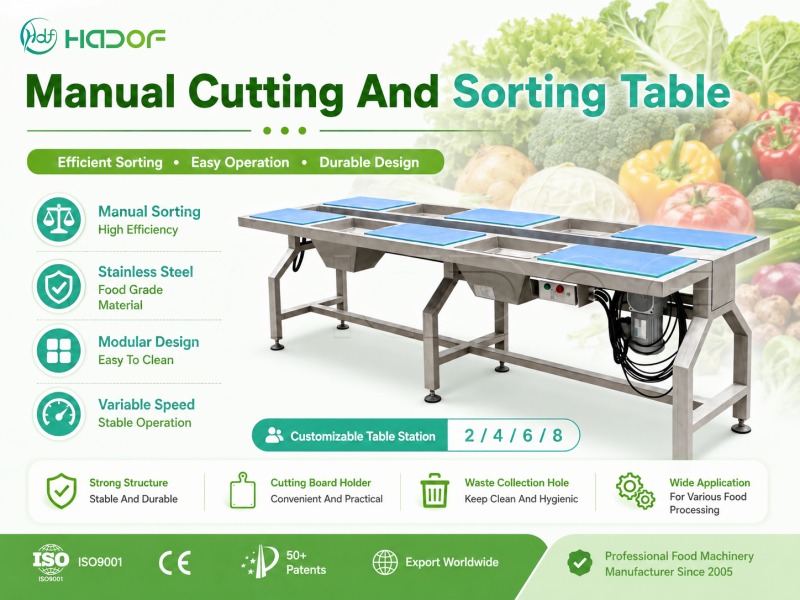
Which Manual Tasks Does a Sorting Table Replace in a High-Volume Plant?
Manual vegetable preparation usually assigns workers to carry produce to a table, trim roots, reject damaged pieces, and carry waste away before cutting or packing. The double-layer manual cutting and sorting table with waste collection holes gives each worker a cutting board holder and a waste hole at the station, so trimming and waste removal happen in one position. The upper conveyor transports raw material while the lower conveyor carries finished product or waste, which removes the walking and lifting that consume a shift. A high-volume plant therefore turns scattered manual food handling into a measured, repeatable flow.
How Does the Double-Layer Conveyor Structure Reduce Waste and Handling?
The double-layer design separates raw material from finished product, because the upper belt feeds the workers while the lower belt takes away trimmed waste and completed pieces. The six-workstation vegetable sorting table for fresh-cut production uses frequency-controlled conveyor speed, so a supervisor matches the belt to the material and the team. Each station also keeps its waste from mixing back into clean produce, which reduces rework and keeps the inspection point clear. A plant that removes this double handling cuts both labor and the food processing cost of contamination.
How Many Workstations Fit a Large Fresh-Cut Vegetable Line?
Workstation count decides how many operators can trim and inspect at once, and the table supports 2, 4, 6, or 8 stations for different budgets and layouts. A six-station line supports six workers at the same time and typically reaches about 1.5 to 3 tons per hour depending on the material. A small workshop often starts with a 2 or 4 station model, while a large vegetable factory buys a 6 or 8 station system. The operator count then matches the food preparation volume instead of forcing one or two people to rush through a growing order.
How Does the Table Connect With Washing and Cutting Equipment?
A sorting table works best when the washed product arrives on a belt and the trimmed product leaves directly to cutting, because a manual handoff reintroduces the labor the table just saved. The line connects with a bubble washer or vortex washer upstream, and the sorted pieces feed an automatic vegetable cutting machine for a sorting line downstream. A matched height and speed keep the food production flow continuous from cleaning to cutting. This connection turns the sorting stage into part of a larger food processing system rather than an isolated bench.
How Should a Plant Measure the Labor Saving Before Purchase?
Assembly line design removes motion, so a plant can estimate the saving by recording the walking, lifting, and waste trips a worker makes before the table arrives. You can review the vegetable sorting equipment manufacturer before a purchase, because the supplier helps a buyer choose the workstation count and conveyor structure for the real layout. A measured labor saving turns the food machinery decision from a guess into a budget the plant can defend.
Conclusion
A stainless steel manual vegetable sorting table reduces labor in a high-volume plant by gathering cutting, inspection, and waste removal at fixed workstations and by connecting the sorted product directly to cutting. These changes remove walking and double handling while keeping throughput high. If you have interests, you can learn more about https://www.hadofps.com/products/manual-cutting-and-sorting-table/
How Does an Industrial Garlic Peeling Machine Reduce Labor Costs in Commercial Food Processing?
September 30, 2026
Food Processing Equipment, Garlic Peeling, Labor Reduction
Comments Off on How Does an Industrial Garlic Peeling Machine Reduce Labor Costs in Commercial Food Processing?
cs
A peeled garlic factory, a garlic slice producer, or a central kitchen that removes garlic skin by hand spends hours on a step that a machine can finish in minutes. The industrial garlic peeling machine for commercial food processing uses a pneumatic system to remove skin while keeping the clove whole, and that change cuts labor across every shift. This article explains how the machine replaces hand peeling and lowers the food production cost.
How Does Automatic Peeling Replace Manual Labor?
Manual garlic peeling assigns workers to break bulbs and rub away each skin, and the work is slow and hard to supervise. The pneumatic automatic garlic peeler with low damage rate separates the skin with air pressure instead of friction, so one machine does the job of a peeling team. The machine reaches about a 98 percent peeling rate, and it turns a repetitive food handling task into a controlled step. A factory that removes this labor frees workers for sorting and packing.
How Does Low Damage Protect Yield?
Traditional friction peeling often damages five to ten percent of cloves, which is product a factory loses before packing. The automatic garlic skin removing machine for peeled cloves keeps the damage rate below one percent, so a plant that processes ten tons daily can keep far more whole cloves. This yield protection is a hidden saving that a simple labor count misses. A buyer who measures damage rate sees the food manufacturing return more clearly.
How Does the Machine Fit Garlic Slice and Powder Lines?
The same peeling machine feeds the downstream steps for garlic slices and garlic powder, because clean, dry cloves slice and grind better. The machine reduces both moisture and waste, which supports longer shelf life for the peeled product. A factory that peels first and slices or dries second keeps the food processing flow steady. This order turns the peeling stage into the first link of a complete garlic line.
How Should a Buyer Compare Models Before Purchase?
A buyer compares the three model sizes against the daily garlic volume, because a small kitchen and a large factory need different capacity. The machine supports both entry-level and industrial output, so a plant can start small and grow. A careful buyer asks for a trial with its own garlic variety. This check keeps the food machinery matched to the real peeling volume.
How Should a Factory Verify the Supplier?
Garlic peeling rewards a supplier that documents the peeling rate and the damage rate, because those numbers decide the yield. You can review the garlic peeling machine manufacturer before a purchase, and that review shows the engineering and spare part support. A measured trial turns the food machinery decision into a dependable labor saving. A related air drying machine for peeled garlic completes the same processing line.
Conclusion
An industrial garlic peeling machine reduces labor costs by replacing hand skin removal with a pneumatic system that peels fast and keeps damage low. These changes protect yield and lower the food production cost. If you have interests, you can learn more about https://www.hadofps.com/products/automatic-garlic-peeling-machine/
automatic garlic peelingindustrial garlic peeling machinelabor cost reductionpeeled garlic